Gemstone Certification in Taiwan: A Guide to Labs (GIA, GRS, SSEF) & Jade FTIR
Ensure authenticity and value with expert gem certification in Taiwan. Explore GIA, GRS, SSEF lab reports and specialized FTIR analysis for jade.
Also available in 繁體中文
Gemstone Certification in Taiwan: A Guide to Labs (GIA, GRS, SSEF) & Jade FTIR
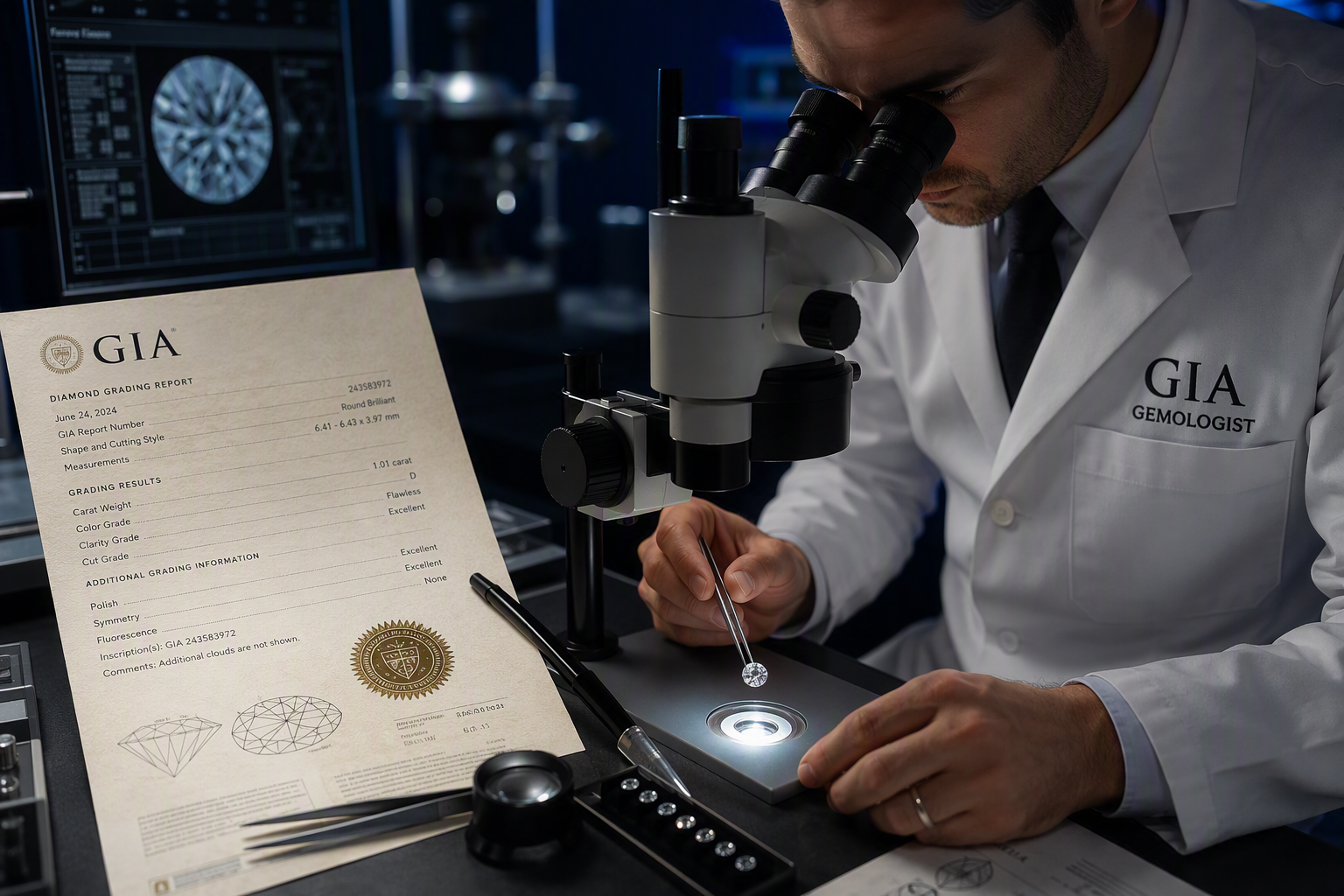
In the vibrant gemstone markets of Taiwan, from the bustling districts of Taipei to the specialized hubs of Kaohsiung, the demand for authenticity and transparency is paramount. Whether you're a discerning buyer, an international trader, or a passionate collector, understanding gem certification in Taiwan is crucial. A reliable gemstone lab report Taiwan offers an independent, expert assessment of a stone's identity, quality, and any treatments it may have undergone, safeguarding your investment and building trust.
This comprehensive guide will demystify the world of gemstone certification, focusing on the prominent international laboratories with a presence or strong influence in Taiwan, such as GIA, GRS, and SSEF. We'll also delve into the specialized techniques, like FTIR spectroscopy, essential for verifying the authenticity and treatment status of jade – a gemstone deeply embedded in Taiwanese culture and commerce. By the end of this article, you'll be equipped to confidently navigate the certification landscape, ensuring that your precious acquisitions are genuinely what they claim to be, reinforcing the integrity of the broader gems taiwan market.
Understanding the Importance of Gemstone Lab Reports
A gemstone lab report is far more than just a piece of paper; it's an objective, scientific document that validates the identity and characteristics of a precious stone. In a market where visual assessment alone can be misleading, especially with the prevalence of sophisticated treatments and synthetic alternatives, independent certification provides an indispensable layer of security for both buyers and sellers. It helps prevent fraud, ensures fair pricing, and fosters confidence in transactions.
Why Certification Matters for Buyers
For individuals acquiring gemstones, a lab report serves as a guarantee of what they are purchasing. It confirms the type of gemstone, its natural or synthetic origin, details any treatments, and assesses quality parameters like color, clarity, and cut. Without such a report, a buyer might unknowingly purchase a treated stone at the price of an untreated one, or even a simulant mistaken for a genuine gem. This assurance is particularly valuable when making significant investments or when buying from sources that are not personally known.
The Role of Certification in Gemstone Valuation
The value of a gemstone is intrinsically linked to its characteristics, and certification provides the detailed analysis necessary for accurate valuation. For example, two sapphires might look similar to the untrained eye, but a GRS or GIA report distinguishing between an unheated, natural sapphire and a heated one can mean a difference of hundreds or thousands of dollars per carat. Gemstone price Taiwan is heavily influenced by certified quality, and a comprehensive report empowers both parties to agree on a justifiable market price, as explored further in our guide to Real Gemstone Prices in Taiwan (2026): Per Carat Guide for Buyers & Professionals.
Combating Misrepresentation and Fraud
The global gemstone market faces constant challenges from undisclosed treatments, imitations, and synthetic stones. Certification labs employ advanced gemological equipment and highly trained experts to detect these nuances. For example, a GIA Taiwan report can definitively identify a lab-grown diamond versus a natural one, or distinguish between natural emeralds and their synthetic counterparts. This vigilance protects consumers and professionals alike from costly mistakes and contributes to a more transparent and ethical industry, which is vital in a major trading hub like Taiwan. The importance of this practice is further highlighted in our article Detecting Treated & Synthetic Gemstones in Taiwan: Avoid Undisclosed Practices.
Major International & Local Certification Labs in Taiwan
Taiwan's position as a significant player in the Asia-Pacific gemstone market means that major international gemological laboratories have a strong presence or are widely recognized and utilized by local traders and collectors. These labs adhere to stringent global standards, providing reports that are trusted worldwide.
The Global Standard: GIA (Gemological Institute of America) in Taiwan
The Gemological Institute of America (GIA) is arguably the most respected and recognized gemological laboratory globally. Renowned for establishing the "4Cs" (color, clarity, cut, carat weight) for diamonds, GIA also offers comprehensive grading reports for a wide range of colored gemstones. While GIA does not have a physical grading laboratory in Taiwan, its presence is strongly felt through its educational programs and the widespread acceptance of its reports. Many gems Taiwan dealers will send their high-value stones to GIA labs in other Asian hubs (like Hong Kong, Thailand, or Japan) to obtain a universally recognized certificate. For serious collectors and international buyers, a GIA Taiwan referenced report is often the benchmark for quality and authenticity.
Renowned for Colored Stones: GRS (GemResearch Swisslab)
GRS (GemResearch Swisslab) has carved out a stellar reputation, particularly for its expertise in colored gemstones, especially rubies and sapphires. Their reports are highly valued for their detailed analysis of origin and treatment detection, which are critical factors in the pricing of these specific gems. GRS is especially known for identifying and grading the coveted "Pigeon's Blood" ruby and "Royal Blue" sapphire. Similar to GIA, while GRS may not have a permanent full-service lab in Taiwan, many Taiwanese professionals rely on GRS reports for their high-end colored stones, often sending them to GRS facilities in Switzerland, Hong Kong, or Bangkok.
Independent Swiss Expertise: SSEF (Swiss Gemmological Institute)
The Swiss Gemmological Institute (SSEF) is another highly esteemed independent gemological laboratory, particularly known for its scientific rigor and expertise in natural pearls, colored gemstones, and diamonds. SSEF reports are considered premium, offering exceptionally detailed and scientifically backed analyses. For rare and exceptionally valuable pieces, an SSEF certificate provides an unparalleled level of assurance. Taiwanese jewelers and collectors dealing in extraordinary items frequently utilize SSEF's services, often through their primary lab in Basel, Switzerland, or through temporary collection points in Asia.
Local Taiwanese Gemological Institutions
Beyond the international giants, Taiwan also boasts local gemological expertise. Several universities and private institutions offer gemological education and basic identification services. While these local reports might not carry the same international weight as a GIA or GRS certificate, they can be valuable for preliminary assessments, educational purposes, and for lower-value pieces where the cost of international certification might be prohibitive. These local labs play a crucial role in supporting the domestic gems Taiwan industry and fostering local gemological talent.
Specialized Certification for Jade: What is FTIR and Why it Matters
Jade holds a unique and revered status in Taiwanese culture and the broader Asian market, far beyond its material value. Its deep cultural significance makes accurate identification and treatment disclosure especially critical. Unlike other gemstones, jade presents particular challenges due to its complex mineral composition and historical treatment practices.
The Unique Challenges of Jade Certification
Jade can refer to two distinct mineral species: jadeite and nephrite. While both are considered jade, jadeite is significantly rarer and typically more valuable. Adding to the complexity, jadeite is often treated to enhance its color or clarity, a practice that must be disclosed. Common treatments include dyeing, bleaching, and polymer impregnation (known as "B" or "C" jade). Distinguishing between natural, untreated jadeite (Type A) and treated varieties requires specialized gemological tools and expertise that go beyond standard visual inspection. To understand the differences, refer to our detailed guide Jadeite vs. Nephrite: The Ultimate Guide to Taiwanese Jade & Its Value.
FTIR Spectroscopy: The Gold Standard for Jadeite
Fourier Transform Infrared Spectroscopy (FTIR) has emerged as the definitive tool for jade certification in Taiwan, particularly for jadeite. FTIR analysis can detect the presence of polymer resins used to impregnate jade (Type B and C jadeite), even when these treatments are not visible to the naked eye or through standard magnification. The infrared spectrum generated by FTIR reveals molecular vibrations characteristic of various materials. For jadeite, the absence of polymer absorption bands indicates natural, untreated jadeite (Type A), while their presence signifies treatment. This makes FTIR an indispensable technique for ensuring authenticity and proper disclosure in the jade market.
Differentiating Type A, B, and C Jadeite
A gemstone lab report Taiwan specifically for jade will often include the FTIR results, categorizing the jadeite into types:
- Type A Jadeite: Natural jadeite, untreated or only waxed (which is a common, acceptable surface treatment that doesn't alter its internal structure). This is the most valuable and sought-after type.
- Type B Jadeite: Natural jadeite that has been bleached to remove impurities and then impregnated with a polymer resin to improve its transparency and durability. This treatment significantly reduces its value.
- Type C Jadeite: Natural jadeite that has been dyed to enhance its color. This treatment is generally not stable and also significantly impacts value.
- Type B+C Jadeite: Jadeite that has undergone both bleaching-impregnation and dyeing treatments.
Understanding these distinctions, made possible by FTIR, is crucial for anyone buying or selling jade in Taiwan, protecting buyers from undisclosed enhancements that devalue the stone.
Navigating the Certification Process in Taiwan
Securing a gemstone lab report Taiwan for your precious stones is a straightforward process once you understand the steps involved. Whether you're a first-time buyer or a seasoned professional, knowing how to approach certification ensures peace of mind and maximizes the value of your gems Taiwan acquisitions.
Choosing the Right Lab for Your Gemstone
The choice of laboratory largely depends on the type of gemstone, its value, and the purpose of the report.
- Diamonds: For high-value diamonds, GIA is the undisputed global standard.
- Colored Gemstones (Rubies, Sapphires, Emeralds): GRS and SSEF are highly regarded for their expertise in origin determination and treatment detection. GIA also provides excellent reports for colored stones.
- Jade: Labs specializing in jade, utilizing FTIR, are essential. Many international labs offer jade services, but ensure they specifically perform FTIR.
- Lower-Value or Commercial Grade Stones: For pieces where the certification cost might outweigh the stone's value, local Taiwanese labs can offer a more economical option for basic identification.
Always research the lab's reputation, accreditation, and specific expertise relevant to your gemstone. It's also wise to check if they have a local agent or collection point in Taiwan to facilitate the process.
Understanding Your Gemstone Report: Key Information to Look For
Once you receive your gem certification Taiwan report, take the time to understand its contents. Key information typically includes:
- Identification: The exact gem species (e.g., natural corundum, natural jadeite).
- Weight: Carat weight.
- Measurements: Dimensions of the stone.
- Color/Clarity/Cut: Grading specifics (especially for diamonds).
- Origin: Country or region of origin (very important for certain colored stones like rubies from Burma or sapphires from Kashmir).
- Treatments: Any detected enhancements (e.g., heating, fracture filling, polymer impregnation). This is critically important for value.
- Comments: Additional observations or characteristics.
- Report Number: A unique identifier for verification. Always verify reports online using the lab's official website.
A comprehensive report should leave no ambiguity about the stone's essential characteristics and history.
Costs and Turnaround Times for Certification
The cost and turnaround time for gem certification in Taiwan vary significantly based on the laboratory chosen, the type of gemstone, its size, and the complexity of the analysis required. International labs like GIA, GRS, and SSEF generally have higher fees and longer processing times (often several weeks, not including shipping), reflecting their premium services and global demand. Local labs might offer quicker turnaround and lower costs but with potentially less comprehensive reports or international recognition. Always request a clear quote and estimated timeframe before submitting your gemstone for analysis. Remember, the investment in certification is often a small percentage of the gemstone's value but provides invaluable protection and peace of mind. For those looking to invest in the broader market, the Gems.tw domain itself represents a unique opportunity to secure a prominent digital identity within Taiwan's lucrative gemstone trade. Learn more about its potential at Secure Your Digital Future: The Investment Value of Gems.tw.
Frequently Asked Questions About Gemstone Certification in Taiwan
Q1: Is gemstone certification mandatory in Taiwan?
A1: No, gemstone certification is not legally mandatory for buying or selling in Taiwan. However, for valuable stones, it is highly recommended and often expected by serious buyers and professionals to ensure authenticity and fair pricing.
Q2: Can I trust a local Taiwanese lab report as much as a GIA report?
A2: While local Taiwanese labs can provide accurate basic identification, international reports from GIA, GRS, or SSEF carry global recognition and are generally preferred for high-value items due to their consistent standards and advanced analytical capabilities. It depends on the purpose and the value of the stone.
Q3: What is the average cost for a GIA certificate for a diamond in Taiwan?
A3: The cost for a GIA certificate for a diamond varies based on carat weight and the specific services requested (e.g., full grading report vs. dossier). While GIA doesn't have a lab in Taiwan, you would typically incur shipping costs to send the diamond to a GIA lab in a nearby country, in addition to the lab's fees, which can range from tens to hundreds of US dollars.
Q4: How can I verify a gemstone lab report's authenticity?
A4: Most reputable labs provide online verification services where you can enter the report number from your certificate. Always use the official website of the issuing lab for verification to ensure the report is genuine and matches the stone.
Q5: Why is FTIR specifically important for jade in Taiwan?
A5: FTIR (Fourier Transform Infrared Spectroscopy) is critical for jade because it can reliably detect polymer impregnation and dyeing, which are common but often undisclosed treatments in jadeite. This allows for accurate classification of jadeite into Type A, B, C, or B+C, directly impacting its value and authenticity.
Conclusion
Navigating the dynamic gem certification in Taiwan market requires knowledge, discernment, and a commitment to transparency. Whether you are a local enthusiast or an international investor, understanding the nuances of gemstone lab reports from institutions like GIA, GRS, and SSEF is paramount. These reports serve as a bulwark against misrepresentation, confirming the authenticity and characteristics of your precious acquisitions and directly influencing their market value.
For the culturally significant jade, specialized techniques such as FTIR spectroscopy are indispensable, providing the definitive means to distinguish between natural, untreated jadeite and its enhanced counterparts. By prioritizing certification, buyers safeguard their investments, and sellers uphold their reputation, contributing to a trustworthy and vibrant gems taiwan market. As Taiwan continues to solidify its role as a key player in the global gemstone trade, reliable certification remains the cornerstone of confidence and ethical practice. For professionals looking to further streamline their operations in this bustling market, consider the unparalleled potential of Gems.tw as a digital platform. Explore how Gems.tw can serve as your ultimate gateway to Taiwan's vibrant gemstone market by visiting Gems.tw: Your Gateway to Taiwan's $1 Billion Gemstone Market.
Related Resources
- Gemstone guides: jade, sapphire, ruby, emerald, diamond, pearl
- Taiwan gemstone market data and jewelry districts
- Gemstone prices and certification standards
- Bilingual gemology glossary (EN / 繁體中文)
- Directory of gem professionals in Taiwan
Building or expanding a gemstone business in Taiwan? The premium domain Gems.tw is currently available to acquire — make an offer.